How do you care for artificial grass?
Caring for an artificial grass lawn is relatively low-maintenance compared to natural grass. However, there are still some essential tasks to ensure your artificial lawn remains in good condition and looks its best.
Here’s how to care for an artificial grass lawn:
- Regular Cleaning: Sweep or use a leaf blower to remove leaves, debris, and any loose dirt from the surface regularly. This helps prevent organic matter from decomposing and accumulating on the lawn. Use a stiff-bristle brush or broom to brush the fibres against the grain occasionally to keep them standing upright and looking lush.
- Remove Stains and Spills: Treat any spills or stains promptly to prevent them from setting. Use a mild detergent solution and warm water to clean the affected area. Rinse thoroughly to remove any residue. Avoid using harsh chemicals, as they can damage the artificial grass.
- Weed Control: Artificial grass is effective at preventing weeds from growing through, but occasionally, some may still emerge along the edges or seams. Pull weeds by hand or use an appropriate weed killer if needed.
- Pet Waste Management: If you have pets, promptly remove solid waste and rinse the area with water to prevent odors and maintain cleanliness. Artificial grass is designed to be pet-friendly, and some are even equipped with drainage systems for urine.
- Regular Rinsing: Occasionally, give the lawn a thorough rinse with a hose or sprinkler system to wash away dust and pollen. This can help maintain the fresh look of the grass.
- Avoid Open Flames and Hot Objects: Keep open flames, such as cigarettes or fire pits, away from artificial grass, as it can melt or burn. Hot objects like grills should also be placed on a protective pad.
- Heavy Furniture and Equipment: Avoid placing heavy furniture or equipment with sharp or pointed legs directly on the artificial grass, as it may cause indentations. Use protective pads or move these items as needed.
- Regular Inspection: Periodically inspect the lawn for any damage or wear and tear, like tears, seams coming apart, or signs of fading. Address any issues promptly to prevent further damage.
- Grooming and Infill: Some artificial lawns require the use of infill materials to maintain stability and keep the fibers standing upright. Follow the manufacturer’s recommendations regarding the type and application of infill.
- Snow and Ice Removal: When it snows, use a plastic snow shovel or leaf blower to remove snow from the surface. Do not use metal shovels, as they can damage the artificial grass. Salt and ice melt products can also be used sparingly, but follow the manufacturer’s guidelines to prevent any adverse effects on the grass.
Overall, the care for an artificial grass lawn is relatively straightforward, involving routine cleaning and maintenance to keep it looking fresh and clean. Following these guidelines will help ensure the longevity and appearance of your artificial lawn.
Artificial Grass Projects

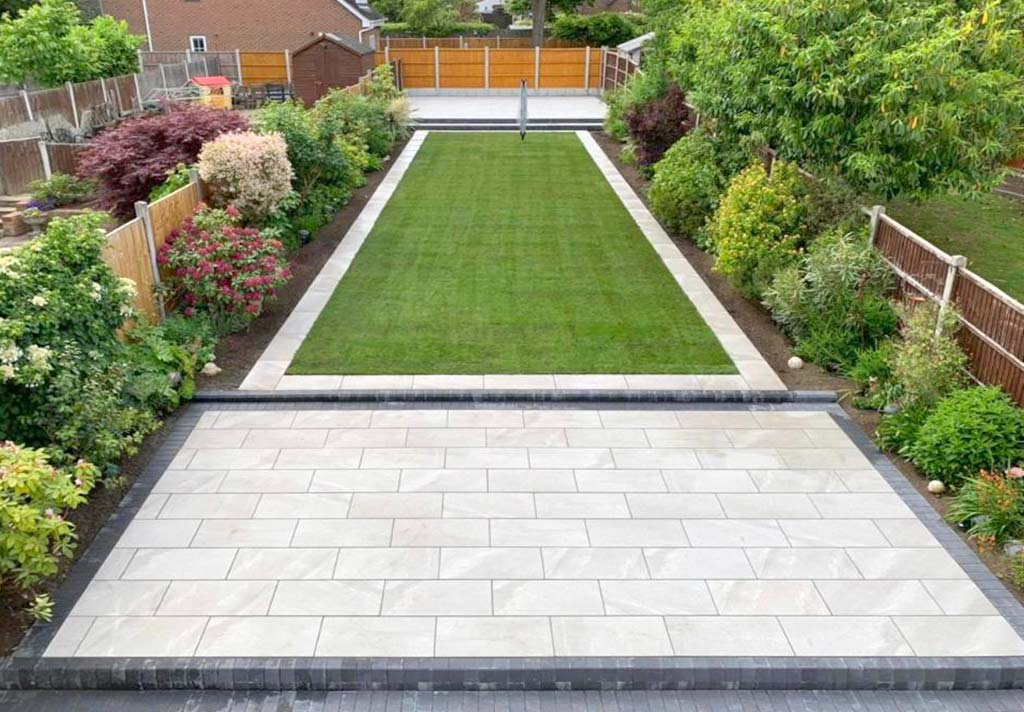
Porcelain Patio and Landscaping Sutton Surrey
“Joseph and his team have transformed our patchy old garden into a beautiful, secluded, low-maintenance space. They were a pleasure to work with and nothing was too much trouble.”

Artificial Grass, Garden Landscaping and Fencing, Kenley, Croydon
Our client lives in Kenley, in the London Borough of Croydon. Their back garden needed a serious makeover, so they contacted us to transform the area with artificial grass, garden landscaping and fencing.

Artificial Grass & Garden Landscaping, Banstead, Surrey
New patios, paths, steps and artificial grass have made David’s garden look fantastic all year round, with hardly any need for maintenance.

Artificial Grass Playing Field – Victor Seymour Infant School – Carshalton, Surrey
The staff and pupils at Victor Seymour are delighted with their new artificial grass playing field – it looks much nicer than the old one and feels great underfoot.